Business Incorporation services cover everything involved in bringing a company into legal existence — choosing the right structure, registering with the state, and putting the federal and state registrations in place before you begin trading.
The formal process of registering a business as a legal entity with a U.S. state.
It separates the company from its owners, so business debts and liabilities generally stay with the business rather than your personal assets.
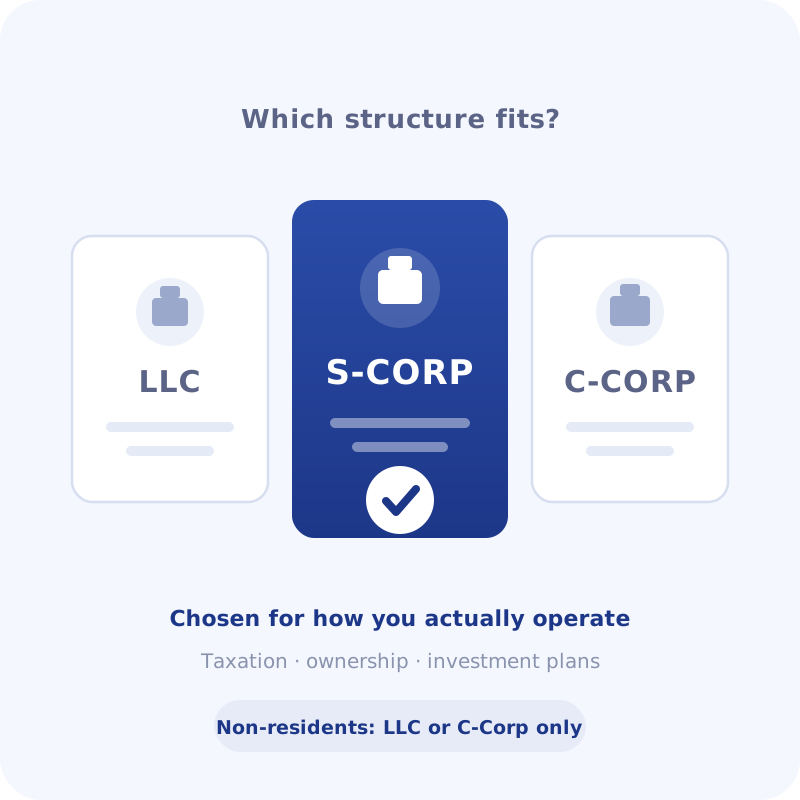
The structure you pick — LLC, S Corporation, C Corporation or Partnership — determines how you are taxed, how profits are distributed, and what you must file each year.


Forming a company involves several filings that have to line up with one another. We handle the sequence end to end:
Entity Selection: Reviewing your ownership, income expectations and long-term plans to recommend the structure that fits — not simply the cheapest one to file.
State Registration: Preparing and filing your Articles of Organization or Articles of Incorporation with the Secretary of State.
EIN Application: Obtaining your federal Employer Identification Number from the IRS, which you will need for banking, payroll and tax filing.
Registered Agent & Governing Documents: Arranging registered agent service and preparing the operating agreement or corporate bylaws that set out how the business is run.
Elections and Follow-up Filings: Filing the S Corporation election where it benefits you, and flagging the annual reports and state registrations that follow.
The Right Structure First Time: Changing entity type later is disruptive and can carry a tax cost. We get the decision right at the outset.
Non-Resident Founders Welcome: You do not need to be a U.S. citizen or resident to own a U.S. company, and we regularly guide overseas founders through the process.
Nothing Left Half-Finished: A filed certificate alone does not make a business operational. We stay with it through EIN, banking documentation and your first filing obligations.
One Team Afterwards: The same people who form the company can handle its bookkeeping, payroll and tax returns, so nothing is lost in a handover.
Forming your company takes three straightforward steps:
Share who the owners are, what the business will do and which state you want to register in. We recommend the structure that suits you.
We prepare and submit your state formation documents, apply for your EIN and put your governing documents in place.
You receive your formation certificate, EIN letter and company documents — everything a bank will ask for to open your account.
Common questions about forming a company in the United States.
It depends on how you intend to take money out of the business, whether you plan to bring in investors, and how many owners there are. An LLC is flexible and simple to maintain, while a corporation suits businesses that expect outside investment or want to retain earnings in the company. We look at your situation before recommending either.
An S Corporation is a tax election rather than a separate entity type — an LLC or corporation can elect it. It can reduce self-employment tax once the business is consistently profitable, but it also brings payroll obligations. It is worth doing at a certain level of income and not before, and we will tell you which side of that line you are on.
Usually the state where you actually operate. Registering elsewhere for a perceived tax advantage often means registering as a foreign entity in your home state anyway, which leaves you with two sets of fees and filings instead of one.
Yes. There is no citizenship or residency requirement to own a U.S. LLC or C Corporation. Non-residents cannot be shareholders of an S Corporation, which is one reason entity selection matters for overseas founders. You will need an EIN, and depending on your circumstances an ITIN as well.
State processing times vary from a couple of business days to several weeks, and many states offer expedited handling for an additional fee. The EIN is typically issued shortly after the entity is approved. We will give you a realistic timeline for your chosen state before you commit.
Most states require an annual report and franchise tax or filing fee to keep the entity in good standing. You will also have federal and state tax returns, and possibly payroll and sales tax registrations depending on what you do. We set out your calendar so nothing is missed in the first year.

https://www.irs.gov/individuals/international-taxpayers/acceptance-agents-india
We can help you with the ITIN application and renewal, including document authentication for the IRS. However, final approval is subject to the IRS's decision. An ITIN is strictly for tax use and does not grant U.S. work authorization or Social Security benefits.
Tired of confusing paperwork and lengthy procedures? Avoid the hassle and apply for your ITIN stress-free today by using our streamlined services.


 WhatsApp